
Last updated November 21, 2026
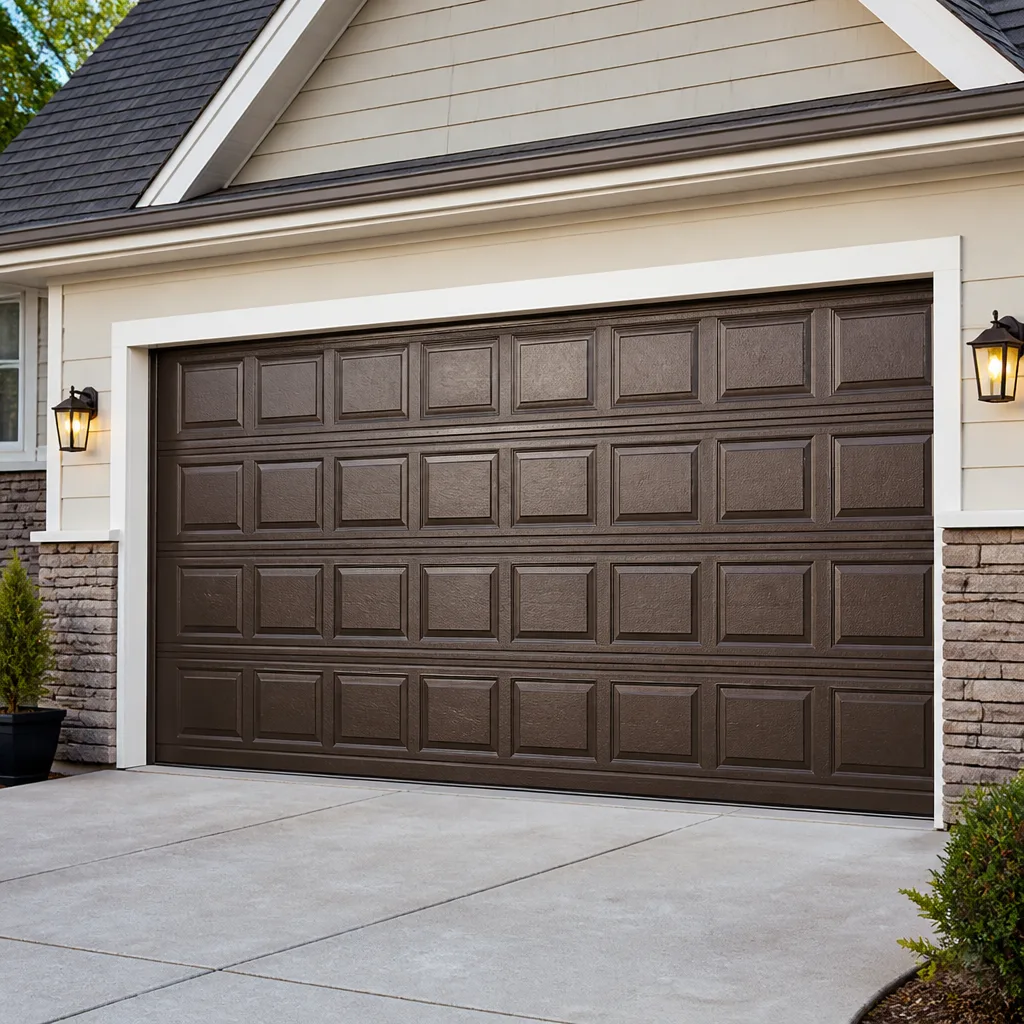 Raised-panel steel
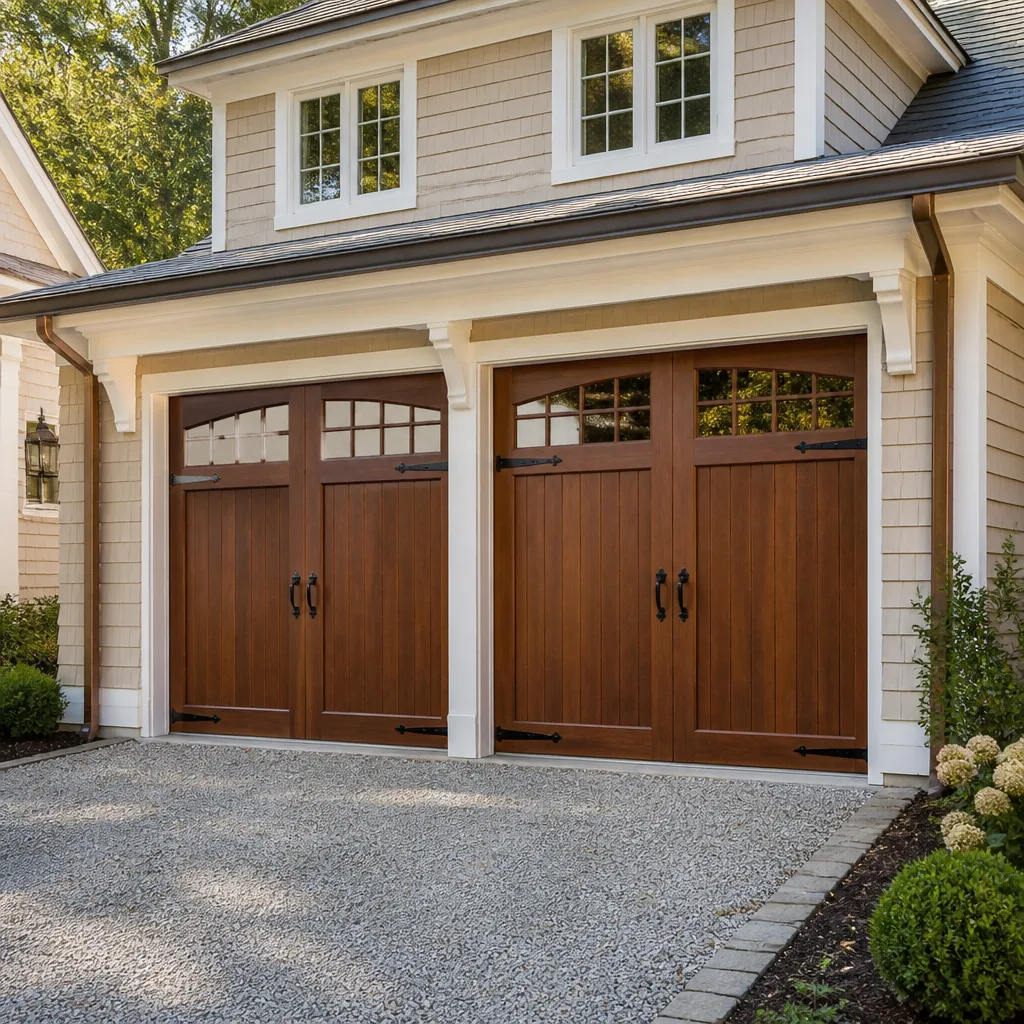 Carriage house
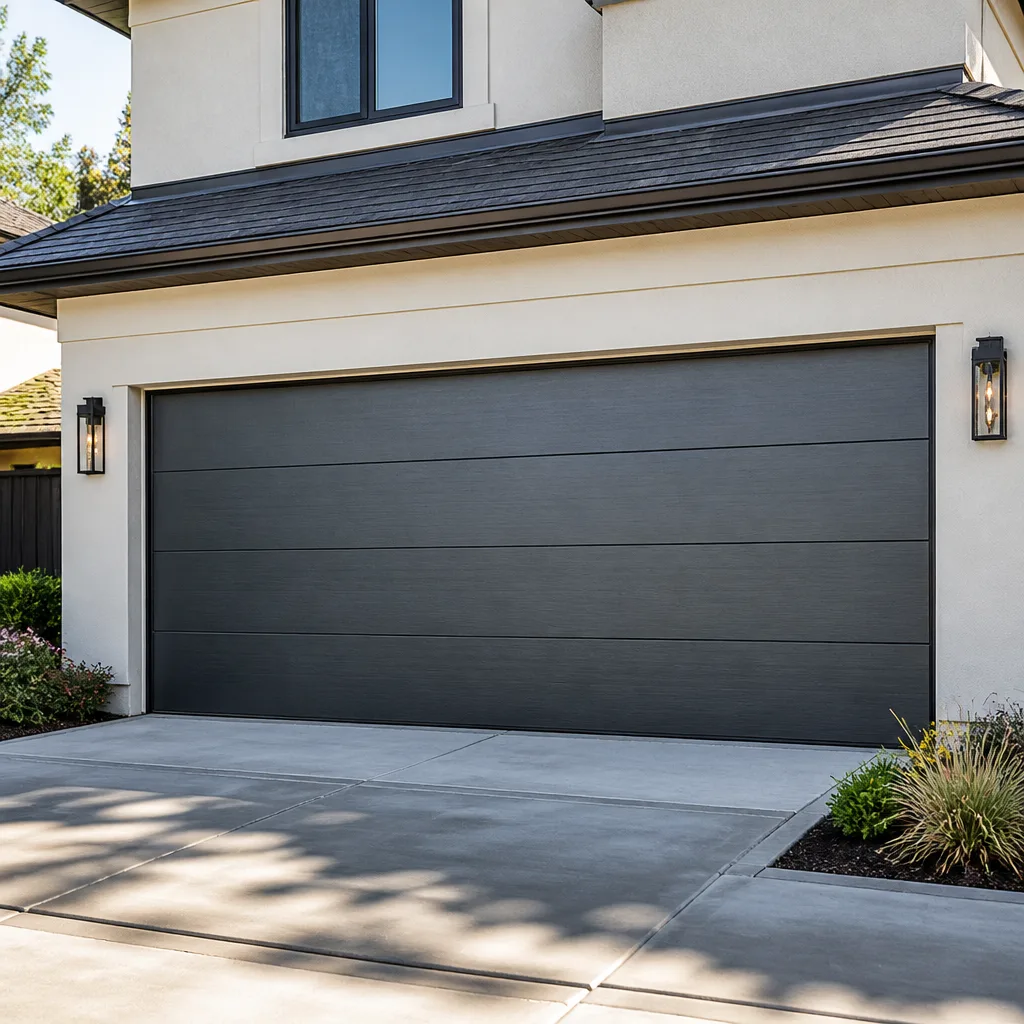 Modern flush
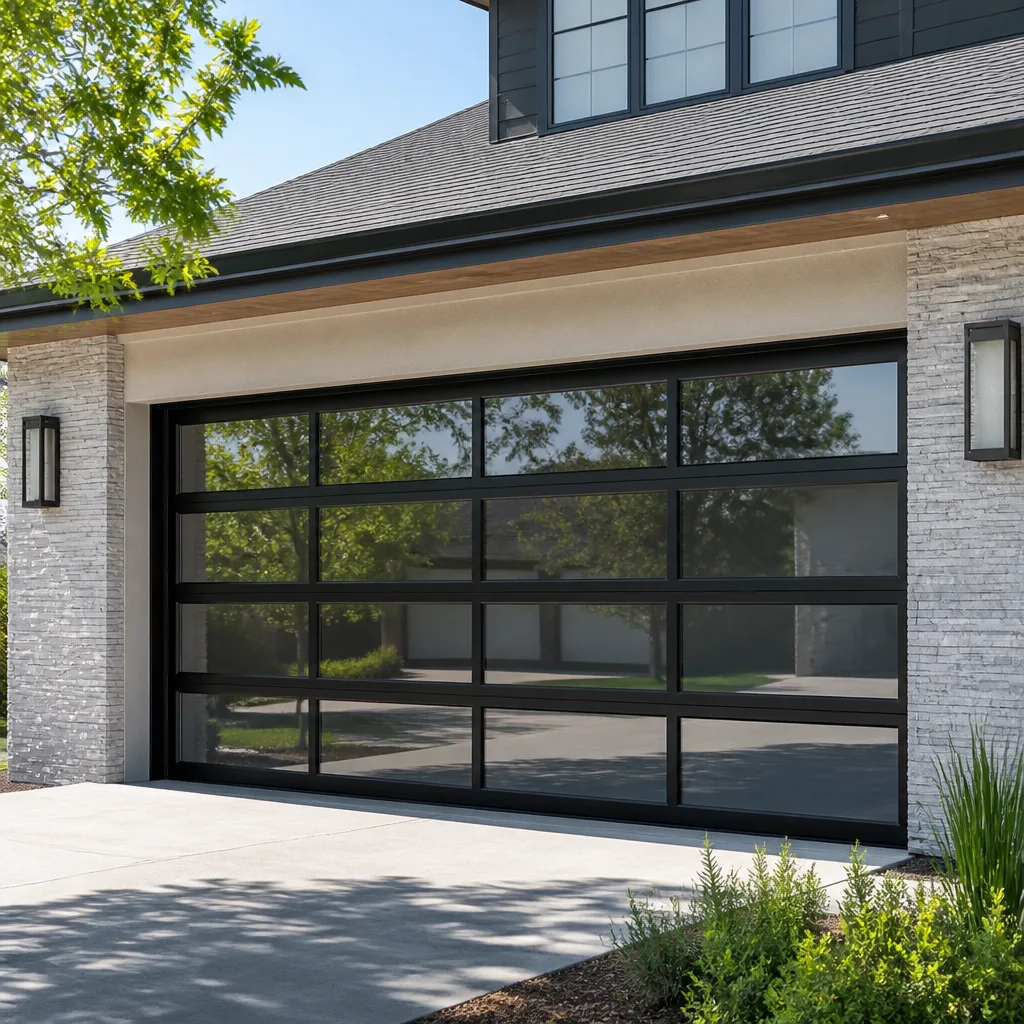 Full-view glass
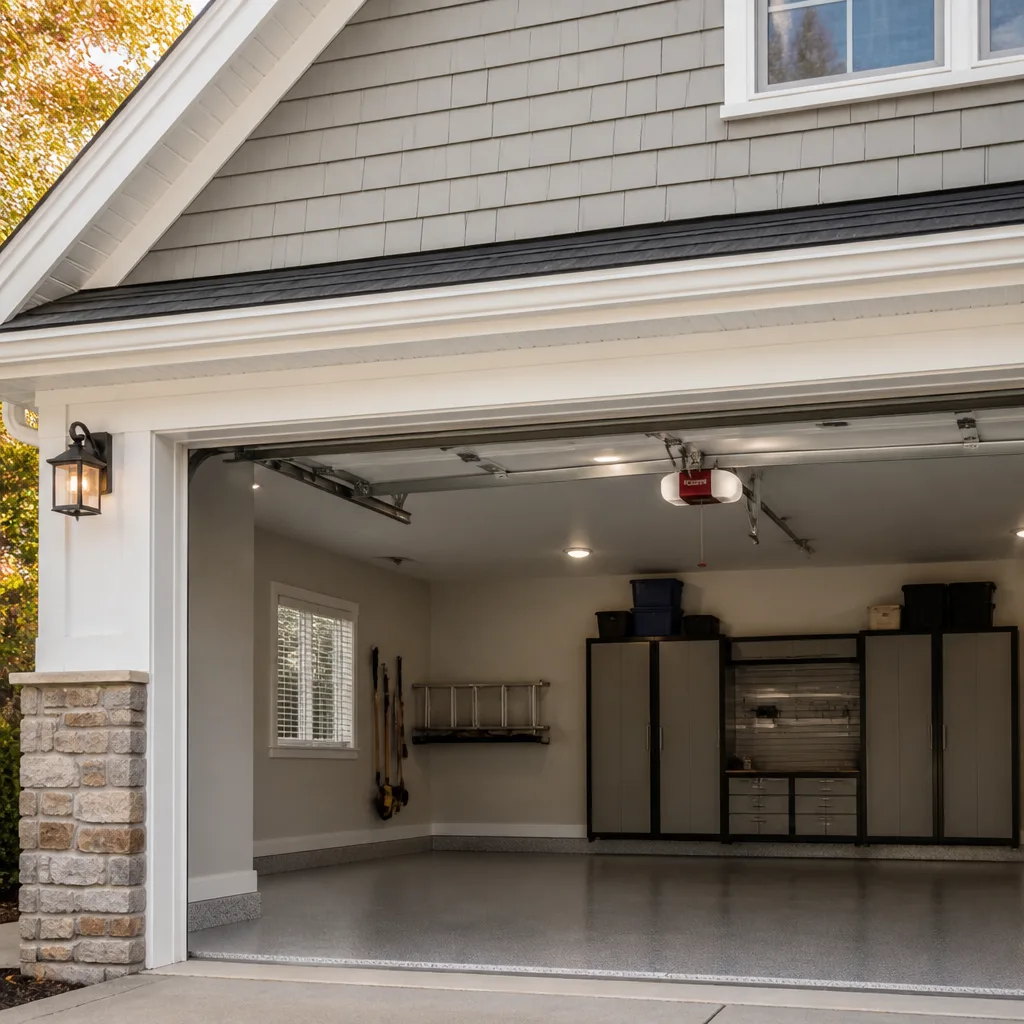 LiftMaster openers
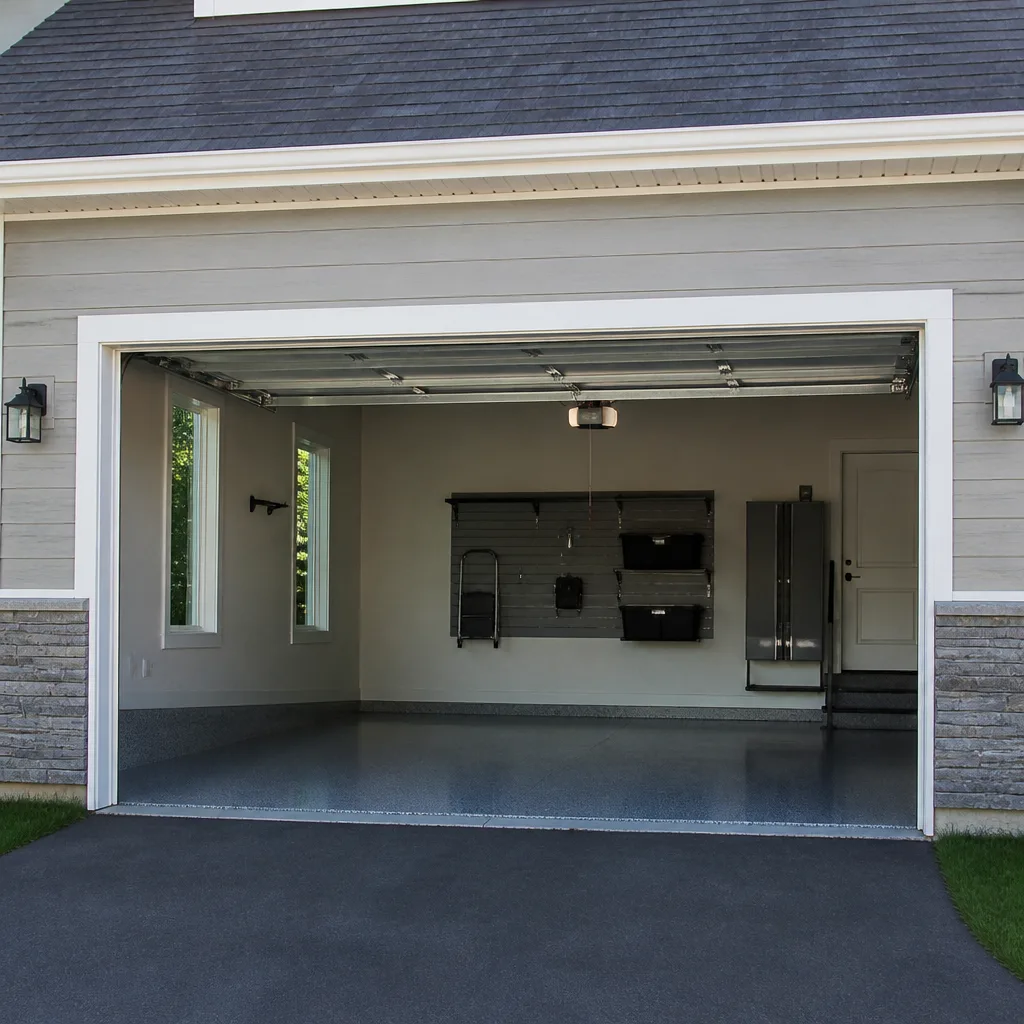 Chamberlain openers
Full 25-point door and opener safety check with every visit - springs, cables, rollers, tracks, and your LiftMaster or Chamberlain opener included
You get a price before we start. It does not change when the pro arrives.
Get your free estimateHow to Hire a Garage Door Contractor in Lower East Side: A Step-by-Step Guide
Most people hire a garage door contractor the same way they hire a plumber: call the first number that answers, ask what it costs, book it. In a dense neighborhood like the Lower East Side, that approach breaks down fast. A door that sits on a narrow street inside a building with shared walls is a different job from a door on a suburban driveway, and the contractor who quoted you over the phone without ever seeing your header space, your alley, or your neighbor’s access has already missed the three things that make the job work. This guide walks you through how to screen a contractor for a Lower East Side job specifically: what documents to ask for, what questions expose the difference between a crew that runs its own install and one that farms it out, and how to compare two quotes when only one of them accounts for what a tight urban building actually demands. By the end you’ll know exactly what to ask before anyone touches your door.
Quick Answer
To hire a garage door contractor in Lower East Side, verify the contractor’s insurance certificate and business registration in writing, confirm they’ll measure your actual header space and access route on site before quoting, and insist on a written estimate that itemizes parts, labor, and debris removal. A legitimate contractor will ask about neighboring unit access and vehicle staging before they give you a number. Anyone who quotes a full job off a phone description without measuring is guessing, and the guess grows once they arrive.
Styles & brands we work with
- Raised-panel steel
- Carriage house
- Modern flush
- Full-view glass
- LiftMaster openers
- Chamberlain openers
Table of Contents
- Why Urban Garage Door Work Is a Different Job
- What “Licensed and Insured” Actually Means in NYC
- Job Site Logistics: The Questions Competitors Skip
- How to Compare Two Quotes Fairly
- Sub-Contracted Installs vs. a Contractor Who Runs the Job
- What a Legitimate Written Estimate Contains
- Springs, Cables, and Why You Don’t DIY
- Matching the Contractor to Your Brand
Why Urban Garage Door Work Is a Different Job
A garage door in a Lower East Side building is rarely a standalone door attached to a standalone house. It sits under a storefront, behind a shared courtyard, inside a mixed-use building where the same wall you’re mounting hardware to also holds up somebody’s apartment. That changes the job in ways a suburban contractor won’t think about until they arrive.
Three things go wrong first in dense urban work:
- Header space measurement. The track and spring system needs room above the door. In older Lower East Side buildings, that space is often shallower than a standard installation assumes, and the fix isn’t a bigger hammer, it’s a different configuration. A contractor who quotes without measuring doesn’t know which configuration you need.
- Neighbor access. Shared walls, party walls, and alleyways mean a technician may need access to a neighboring unit’s side of the wall, or at minimum the neighbor’s cooperation. If nobody asks, somebody gets surprised on install day.
- Vehicle staging. There’s no driveway to park a van in. A loading zone, a hydrant, or a narrow one-way means the crew has to plan where the vehicle sits and how material moves from it to the door. A contractor who parks a full van in a loading zone and calls that a job site is telling you they haven’t done urban work.
None of this is exotic. It’s ordinary Lower East Side reality. The test is simply whether the contractor asks about it before quoting.
What “Licensed and Insured” Actually Means in NYC
“Licensed and insured” gets said so often it stops meaning anything. In New York City the words carry specific weight, and the documents you should actually request differ from what a homeowner in a suburban state would ask for.
The general liability insurance certificate is the single most important paper in the stack. Ask for a certificate of insurance naming the policy and coverage limits, and ask the contractor to have their insurance carrier send it directly to you rather than forwarding a PDF. That closes the easiest loophole: a certificate that’s been altered or belongs to somebody else. If a contractor can’t produce one, stop there.
New York also requires home improvement contractors working on residential property to register with the state, and the registration should match the business name on the quote. Ask for the registration number and confirm it. This is one of the most commonly skipped checks in the Lower East Side, and it’s the one that protects you if the job goes wrong.
Workers’ compensation coverage matters the moment more than one person shows up. If a worker is injured on your property and the contractor has no coverage, the exposure can come back to you. Request that certificate too.
What you’re asking for, laid out plainly:
- Certificate of insurance for general liability, sent directly from the carrier.
- State home improvement registration, name-matched to the quote.
- Workers’ compensation certificate if more than one person will be on site.
- A written contract signed before work starts, not after.
None of this is unusual to ask for. A professional expects every one of these requests and produces them without friction.
Job Site Logistics: The Questions Competitors Skip
Here’s where a Lower East Side job diverges hardest from the generic hiring advice you’ll read everywhere else. The logistics questions are not nitpicks. They’re the difference between a clean install and three days of friction.
Ask any contractor you’re considering the following before you sign anything:
- How will you stage your vehicle? There’s no driveway here. Ask where the van will sit, whether they’ll need a permit for a loading zone, and how they plan around street cleaning and trash collection days. A crew that hasn’t thought about this will lose half a day towing or circling.
- How will material reach the door? A full sectional door arrives in panels that have to move through a hallway, a courtyard, or a stoop. In a mixed-use building with an elevator, panels may not fit and may need to come up stairs. Ask how they’ll handle it. If the door is behind an interior storefront bay, the route changes again.
- Will you need access to a neighboring unit? Shared walls mean shared decisions. Ask the contractor to walk the route with you and identify every point where access touches somebody else’s space.
- How will debris leave the site? Old panels, tracks, and packaging don’t fit in a trash can. Ask who hauls it, where it goes, and whether it’s included in the estimate or billed separately. In a dense building this can matter as much as the install itself.
- What’s the plan if the door won’t clear the building’s loading path? A good contractor has already thought about disassembly on site versus a factory pre-assembled unit.
When we look at a Lower East Side door, these aren’t questions we ask after we quote. They shape the quote. A contractor who can’t answer them has never done a job that looked like yours.
How to Compare Two Quotes Fairly
Two quotes for the same garage door in the Lower East Side can differ by hundreds of dollars and both be legitimate – because one contractor built in the urban labor complexity and one didn’t. The higher number isn’t automatically the better quote, and the lower one isn’t automatically a bargain. What matters is whether the line items tell the same story.
Compare on these axes, not on the bottom line:
- Is the door measured? A quote that reflects an actual on-site measurement of your header, track depth, and opening width is comparable. A quote built from a phone description is a placeholder.
- Is labor broken out? Urban installs take longer. A quote that shows labor separately, with the access route accounted for, is honest. A single lump sum hides the difference.
- Is debris removal included? If it isn’t, add the cost of hauling away a full old door and see how the numbers compare.
- Are springs and hardware new? A new door hung on tired torsion springs is a callback waiting to happen. Ask what’s included in the parts line.
- Does the estimate state the final price? A written estimate sets the price. A verbal one sets a conversation.
When a quote looks unusually low, ask what it leaves out. In our experience, an under-quote in a dense urban building almost always means the contractor plans to bill the gap back to you once the truck arrives. The numbers won’t match, and by then the old door is already coming down.
The right comparison is line item to line item, on paper, before anyone starts. Get the free estimate, put the quotes side by side, and pick the one where the scope matches the reality of your building.
Sub-Contracted Installs vs. a Contractor Who Runs the Job
This is the question almost nobody asks, and it’s the one that decides who’s accountable when something goes wrong. Some contractors sell the job and then hand the physical install to another outfit. Others keep the work in-house, so the person who quoted you is the same business standing behind the install.
It matters for a few concrete reasons. When a subcontracted install goes wrong, the contractor you signed with points at the crew, the crew points at the manufacturer, and you’re in the middle holding a door that won’t close. When the same operation sells and performs the work, there’s one number to call and one business on the contract.
Ask directly: “Will your own technicians do this install, or will you subcontract it?” A good contractor answers without hesitation. Then ask about the emergency line – if the door fails the night after an install, who comes back? A contractor who runs their own work doesn’t have to route you through a middleman.
This is also where single-source capability helps. A contractor who handles garage door installation, opener work, and spring replacement under one roof doesn’t need to hand your door to an outside vendor when one part of the job crosses into another. If the opener buyer also needs a new door, both happen on one schedule and one contract.
The Lower East Side is small enough that reputation travels. Ask your building’s super, ask a neighbor on the block, and ask the contractor pointed questions about who actually shows up. The answer tells you how much accountability you’re buying.
What a Legitimate Written Estimate Contains
A verbal ballpark in NYC almost always grows. That’s not because contractors are dishonest – it’s because a number given without measurement, without an access route, and without a written scope has nothing holding it in place. A written estimate is the thing that holds it down.
Here’s what a proper estimate should include:
- Your name, address, and the contractor’s business name and address. Name-matched to the insurance and registration documents.
- A description of the work. Not “replace door” but “remove existing sectional door, install new door of [size and model], replace torsion springs, adjust track and opener linkage.”
- Materials, listed by brand and model. If the door is Amarr or Wayne Dalton, it says so. If the opener is a specific model, it says so.
- Labor, itemized. The install labor as a line, separate from parts.
- Debris removal. Stated as included or as a separate line. Never left blank.
- A stated total, and clear language that this is the price for the described work. If the job later changes – a different door size, an added opener – that’s a new written change, not a surprise invoice.
- A signature line. Both parties, before work starts.
Ask the contractor to leave the estimate with you overnight. A legitimate business won’t pressure you to sign on the spot. If the estimate is free and written, there’s no rush to decide. Read it line by line and see whether it matches the scope you agreed to in the walk-through.
Any work the estimate doesn’t describe is work that needs its own written price before it starts. That’s the agreement. Nothing starts without a quoted and agreed price first.
Springs, Cables, and Why You Don’t DIY
If your door’s springs have snapped, the section of this guide you need most is the safety section – because torsion springs and their cables hold the door’s entire weight under tension, and they can release that energy with no warning. This is not a component a homeowner should adjust or attempt to replace. People are seriously injured by garage door springs every year, and the injury almost never happens to a trained technician.
For garage door repair on a broken spring, here’s what to know without ever touching it:
- Stop operating the door. If a spring is broken, the opener is lifting a weight it isn’t designed to carry, and that can burn out the opener motor or snap the door’s cables.
- Look but don’t touch. A visible gap in the spring coils, or a cable hanging loose, is reason to stop and call.
- Keep people and vehicles clear of the door path.
- Book a repair, not a DIY session.
Spring repair is one of the most technically demanding garage door services precisely because it’s the one that punishes a mistake immediately. Higher-tension spring systems on a heavy Lower East Side door demand the right tools and the right technique. Our technicians have up to 13 years of experience with these systems, and it’s still a job we approach with caution every time.
Old cables are a related concern. Cables fray, and a frayed cable can snap under load. If you see fraying or a cable that’s come off a drum, stop operating the door and call for repair.
One pricing fact that trips people up: spring prices are quoted per spring, and most doors use a matched pair that should be replaced together. So the cost of replacing both is roughly double a single spring. A good contractor will tell you which you need before you approve the work.
Matching the Contractor to Your Brand
Every brand of garage door and opener has its quirks, and a contractor who works only one brand will fumble the rest. That’s a hiring criterion worth using. Ask the contractor which systems they work on and whether they’ll service yours.
The main brands you’ll find on Lower East Side doors include Amarr, Wayne Dalton, Craftsman, Clopay, LiftMaster, Chamberlain, Genie, and Raynor. If your door is an Amarr or a Wayne Dalton, ask whether the contractor has experience with that line’s hardware and spring configuration. If your opener is a LiftMaster or a Craftsman, ask whether they work on smart-home-compatible systems. A contractor who does will know how to integrate a new door with the opener, and whether the existing opener will lift the new door’s weight.
This matters especially on garage door opener repair, because opener issues can be trapped in the door’s balance or the opener’s logic board, and the contractor needs to be able to test both. It also matters on installs: a new door and a new opener have to talk to each other, and a contractor who works both ends of the system avoids the handoff problem.
The one thing you do want is breadth. A contractor who works on the eight major brands is more likely to know your system and less likely to try to sell you a replacement door when the real problem is a spring, a track, or an opener safety sensor.
Common Mistakes to Avoid
- Accepting a phone quote for a full install. In an urban building, the header and access route change the number. Insist on a measurement on site before you sign.
- Not asking for the insurance certificate directly from the carrier. A forwarded PDF can be altered. A certificate sent from the insurance company can’t be.
- Skipping the state registration check. New York requires a home improvement registration for residential work. Verify the name matches the quote.
- Choosing on price alone. In the Lower East Side, the cheaper quote is often the one that forgot to account for debris removal, elevator access, or the time to stage a van legally. Add those back in before you compare.
- Letting a contractor park in a loading zone and call it a job site. Ask how they’ll stage the vehicle. A crew that’s thought about it will have an answer.
- Signing a verbal-scope agreement. A written estimate with a signature line is your protection. A handshake and a number is an invitation to a surprise invoice.
- Trying to adjust your own torsion springs. Springs and cables are under enough tension to injure badly. Stop operating the door and call a professional.
See the difference
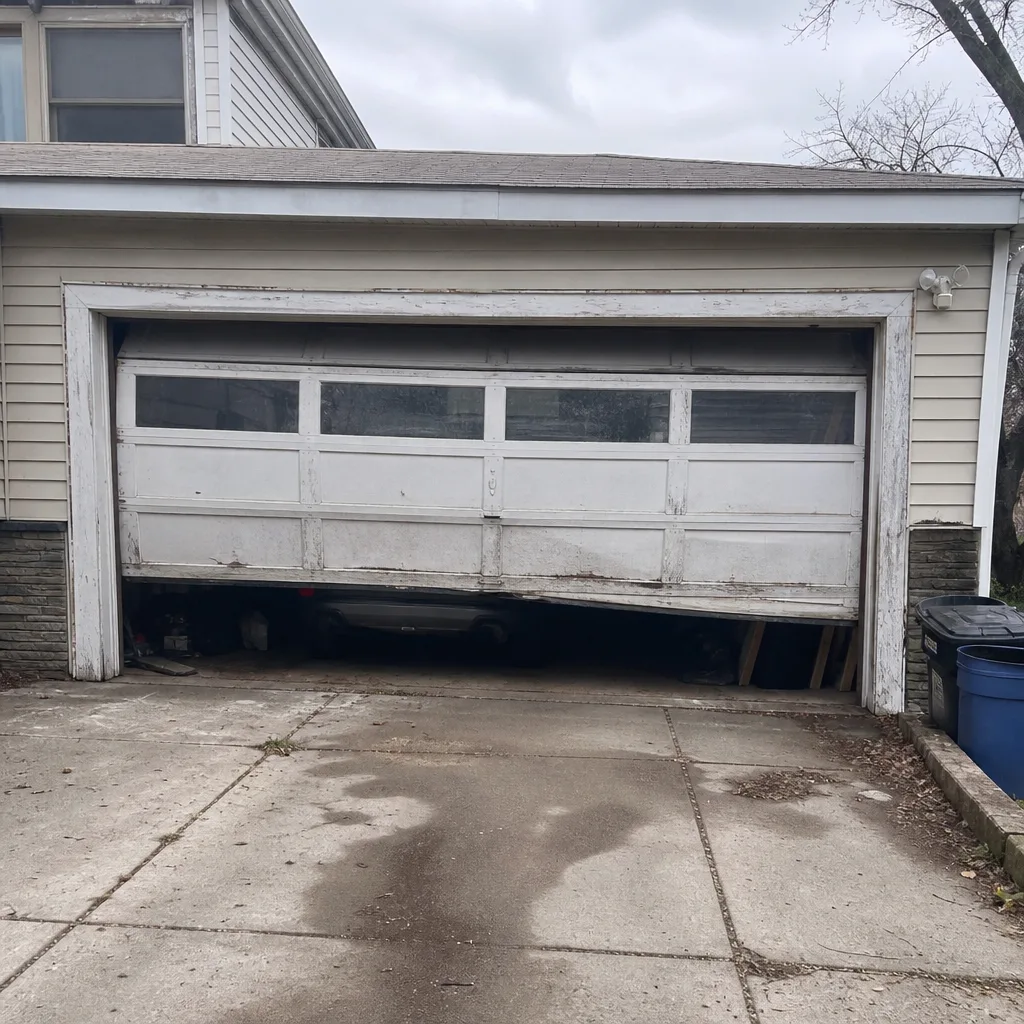 Before
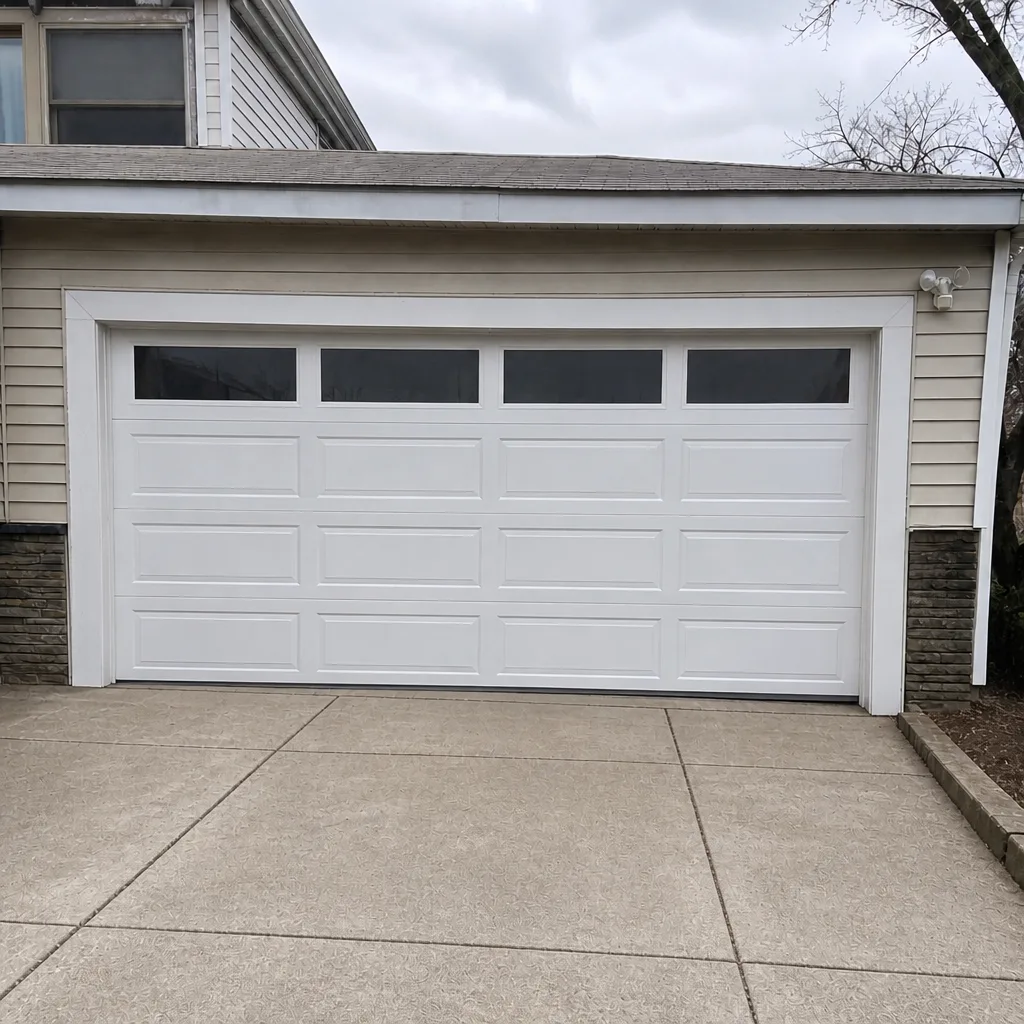 After
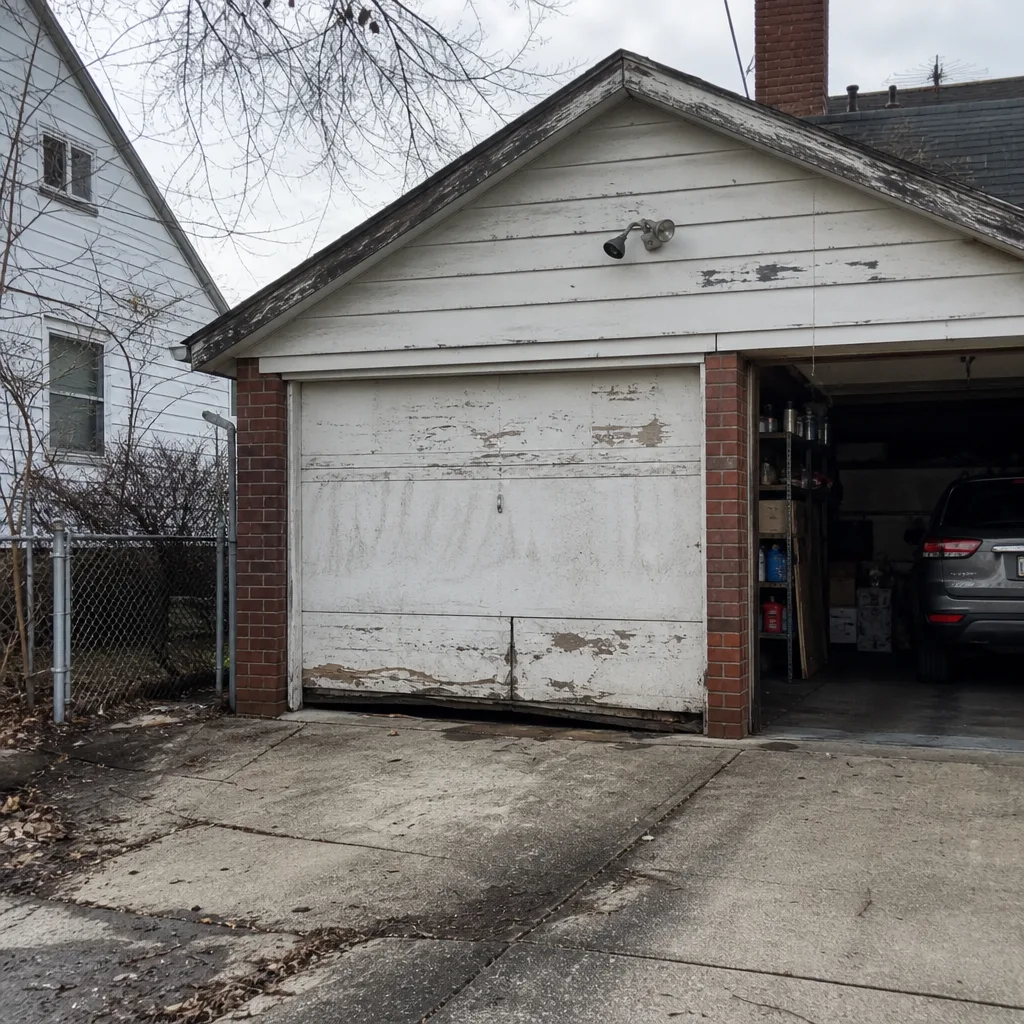 Before
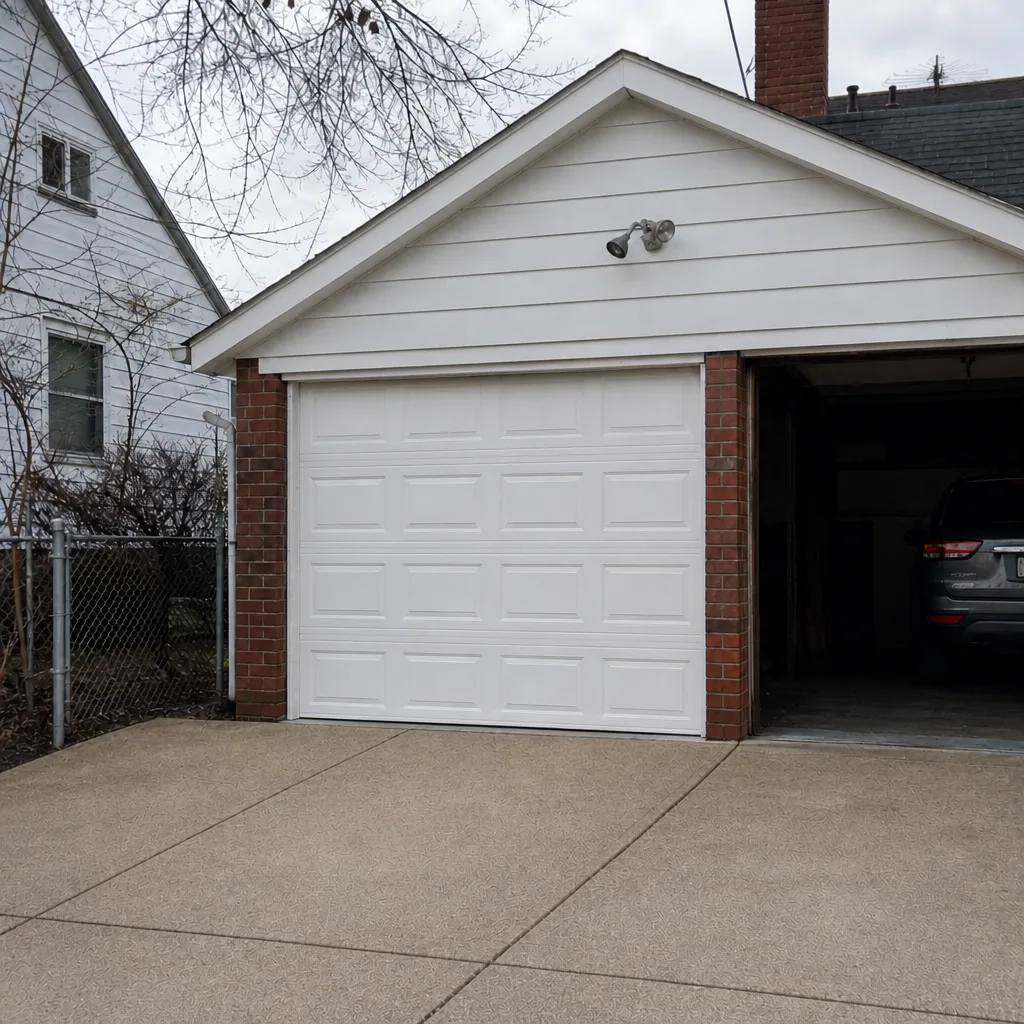 After
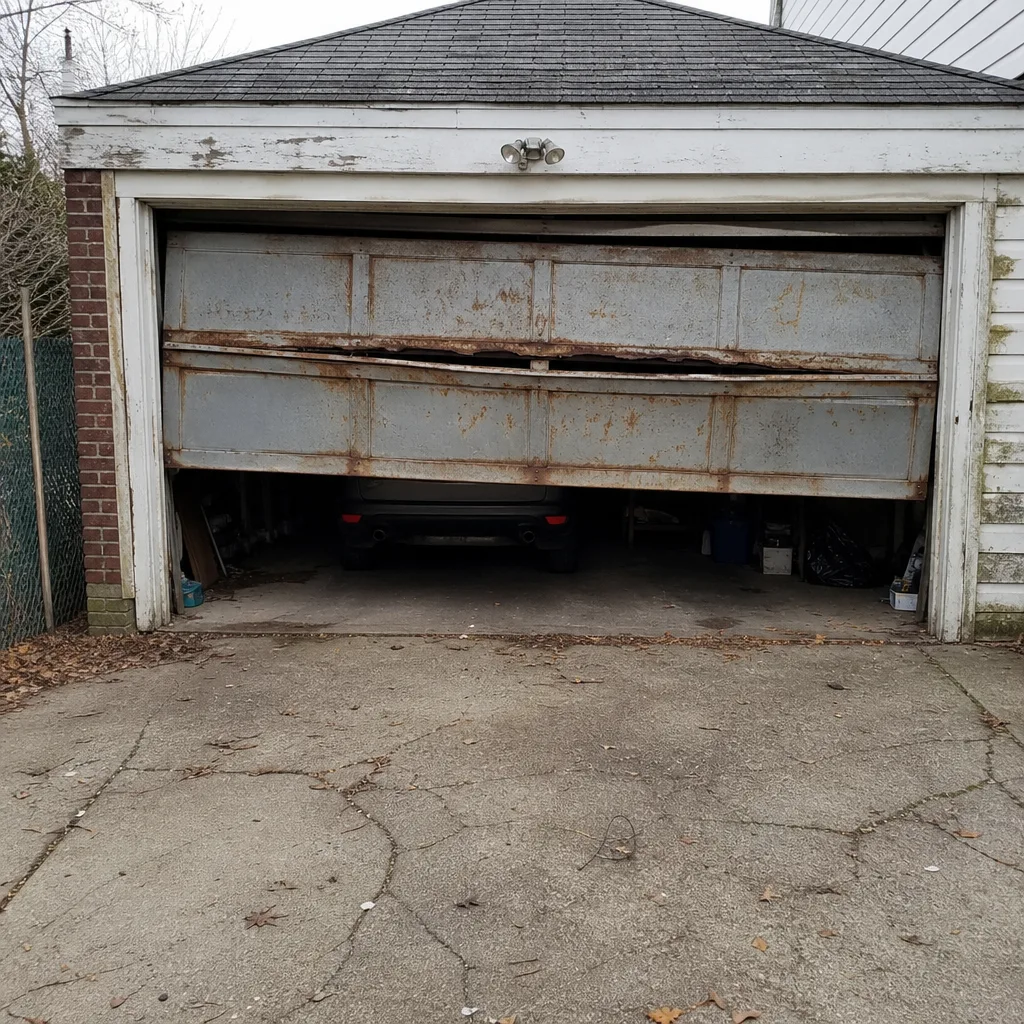 Before
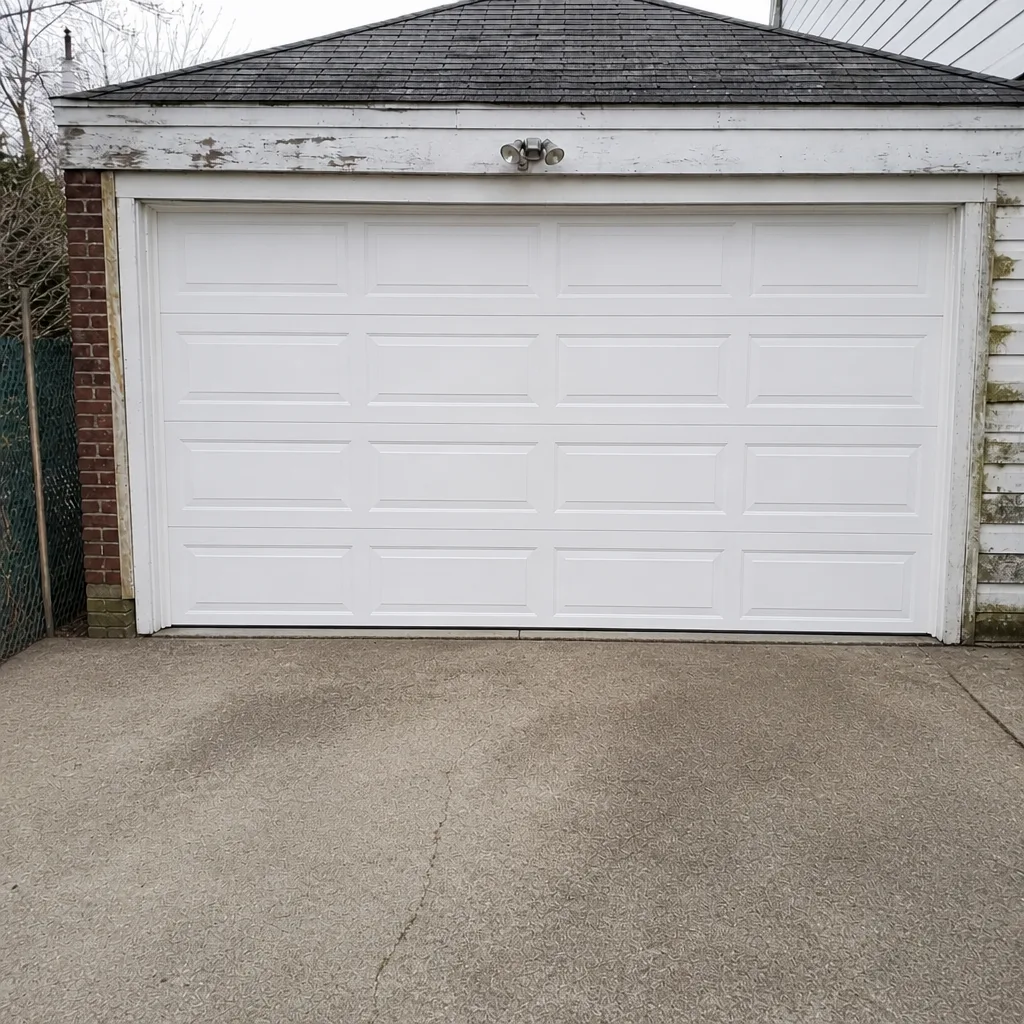 After
When to Call a Professional
Some problems are small and some are urgent, and knowing which is which saves time. Call a professional if your door’s spring has snapped and the door won’t lift or sits crooked in the track. Call if the door won’t close fully, opens partway and reverses, or the opener runs but the door doesn’t move – all signs of a serious mechanical or safety-sensor issue. Call if you see a frayed cable, a bent track, or a panel that’s come loose at a hinge. And call if the door won’t close at all and you need it secured.
For urgent failures, we answer 24/7 with fast dispatch from 7am to 7pm, Sunday through Friday. For a new door or a planned upgrade, we measure first and quote in writing – no same-day promises on scheduled install work, just a free estimate and a written price.
Garage Door Repair Lower East Side offers free estimates in the Lower East Side – call (866) 937-7379.
Frequently Asked Questions
Request a certificate of insurance sent directly from the contractor’s insurance carrier and a copy of the state home improvement registration, and make sure both names match the business name on the written quote. Ask for workers’ compensation coverage as well if more than one person will be on site. If any of these can’t be produced, don’t hire the contractor. Call (866) 937-7379 for a free estimate – the local pro we connect you with is licensed and insured as their state requires.
It depends on the job. A spring replacement is a different scope from a full door install, and urban labor complexity in a dense building changes the number. The written estimate sets the final price. Get a free written estimate before work starts and compare it line by line against any other quote. Call (866) 937-7379 for an exact quote – estimates are free.
For repair and emergency work, yes, same-day service is often possible. We answer 24/7, with fast dispatch from 7am to 7pm, Sunday through Friday. A call outside dispatch hours is booked into the next opening, Sunday through Friday, 7am to 7pm. For a new install or a replacement, the work is measured and scheduled, not same-day. Call (866) 937-7379.
It shouldn’t if the estimate was written after an on-site measurement and a walk-through of your access route. A written estimate is the price for the described scope. Any work not described in the estimate needs its own written price before it starts. If a contractor quotes you over the phone and then shows up with a bigger number, that’s the pattern to avoid. Call (866) 937-7379 for a free written estimate.
Because of logistics, not markup. A dense urban building usually means a narrow or shared access route, no driveway for a van, material that has to move through a hallway or up stairs, and debris that can’t be left curbside. All of that is real labor time. A quote that ignores it will grow once the truck arrives. Ask any contractor how they plan to handle each of those points before you sign.
It depends on your preference for accountability. A contractor who runs their own install has one name on the contract and one number to call if something fails. A subcontracted install can leave you caught between parties. Ask directly whether the contractor’s own technicians will perform the work, and whether they’ll come back if the door fails after install. Call (866) 937-7379 for a free estimate.
The Bottom Line
Hiring a garage door contractor in the Lower East Side comes down to three checks: verify the insurance certificate and state registration in writing, insist on an on-site measurement of your header space and access route before anyone quotes, and get a written estimate that itemizes parts, labor, and debris removal. Ask about vehicle staging, elevator or stair access, neighbor unit access, and whether the contractor runs their own crew. Compare quotes line item to line item, not on the bottom line alone. Avoid phone quotes for installs and never adjust your own torsion springs. Do all of that and you’ll hire someone who can execute the job inside a dense building without leaving you holding the liability. Call (866) 937-7379 to start with a free estimate.
For fast help with a broken door or a written estimate on a new one, call Garage Door Repair Lower East Side at (866) 937-7379. We answer 24/7. Fast dispatch from 7am to 7pm, Sunday through Friday. We work on the brands you already have, from a stuck door to a full replacement, and we quote and agree the price before any work starts. See the full range of Garage Door Repair Lower East Side services for details.
Written by the team at Garage Door Repair Lower East Side.